Six weeks of summer holidays, and somewhere between the trips out and the lazy mornings, writing tends to quietly disappear. It’s an easy skill to lose momentum on. However, keeping it ticking over doesn’t need a workbook or a battle at the kitchen table.
Here’s the reassuring part. A little creative writing, worked into the holiday naturally, is enough to keep your KS2 child’s confidence and skills moving in the right direction. It just needs to feel like play, not homework.
Why Writing Confidence Dips Over the Summer
Writing is often the first skill to slip once the school routine disappears. According to National Literacy Trust research, only around 1 in 4 children now say they enjoy writing in their free time. That’s a steep drop over the last decade.
The good news is that enjoyment, not ability, is usually the real issue. As a result, the fastest way to protect your child’s writing over the summer is to make it fun again, rather than adding pressure.
What “Creative Writing” Really Means at Home
Forget spelling tests and neat handwriting for a moment. At home, creative writing can be a comic strip, a postcard, a silly list, or three sentences about a sandcastle that came to life. Therefore, the bar for “counts as writing practice” is much lower than it feels.
In fact, the messier and sillier the idea, the more likely your child is to actually want to do it.
6 Fun Writing Activities That Don’t Feel Like Homework
1. The Story Jar
Fill a jar with scraps of paper: a character, a place, and a problem on separate slips. Your child pulls one of each and has to write (or tell you) what happens next. Because the combinations are random, every story turns out differently.
2. Postcards From Nowhere
Ask your child to write a postcard home from somewhere they’re not, a desert island, the moon, a candy factory. Two or three sentences is plenty. Similarly, this works brilliantly on car journeys or rainy afternoons.
3. The Object Conversation
Pick two random objects, a sock and a lamp, for example, and ask your child to write a short chat between them. It sounds odd, but children usually find it genuinely funny, and funny is what keeps them writing.
4. Sentence Swap Stories
Take turns writing one sentence each to build a story together. You write a line, they write the next, and so on. As a result, they get the fun of a shared story without the pressure of filling a blank page alone.
5. The One-Star Review
Have your child “review” something ridiculous, a wonky sandcastle, a soggy sandwich, or a boring Tuesday. Reviews are naturally opinionated and easy to write, which makes them a sneaky way to practise persuasive language.
6. Comic Strip It
Not every child wants to write paragraphs, and that’s fine. A four-box comic strip with speech bubbles still counts as storytelling, and it’s often the easiest way in for reluctant writers.
Turning Writing Into a Bigger Habit
Writing, reading and vocabulary all feed into each other, so it rarely helps to focus on just one. For example, our guide to summer reading activities for KS2 is full of ideas that pair naturally with the writing prompts above.
Similarly, a stronger word bank makes writing easier and more fun, since children spend less time hunting for the right word. Our free vocabulary challenge is a quick, low-pressure way to see which words your child already knows well, and which ones are worth a bit more practice.
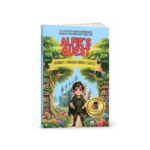
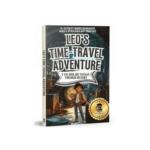
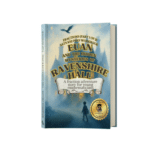
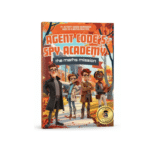
For a more story-led option, Inkwood Adventures builds spelling and vocabulary practice into an interactive story, which is a nice next step once your child is enjoying writing again. We’ve also covered this angle in our piece on preventing summer learning loss.
If Your Child Says “I Don’t Know What to Write”
This is completely normal, so try not to see it as a sign anything’s wrong. Instead of asking for a whole story, ask for one sentence. Once they’ve written that, the next one is usually much easier.
It also helps to write alongside them sometimes. When you’re scribbling your own silly postcard from the moon, writing stops feeling like a task set for them and starts feeling like something you’re doing together.
The Takeaway
Creative writing over the summer holidays doesn’t need a plan, a workbook, or thirty minutes a day. Pick one idea from this list, keep it short, and let it feel like a game rather than a chore. As a result, your KS2 child heads back to school in September with their writing confidence intact, and maybe even a favourite silly postcard to show their teacher.
Want a fun way to build the vocabulary behind great writing? Take the free 5-minute quiz and get personalised recommendations for your child’s reading, vocabulary and spelling level.




Turn revision into an adventure
Inkwood Adventures teaches 11+ and KS2 skills through an illustrated story your child actually wants to finish — no worksheets, no pressure. Chapter 1 is completely free.
▶ Play Chapter 1 free